Korean Bibimbap
Uitgelicht onder: Authentiek koken
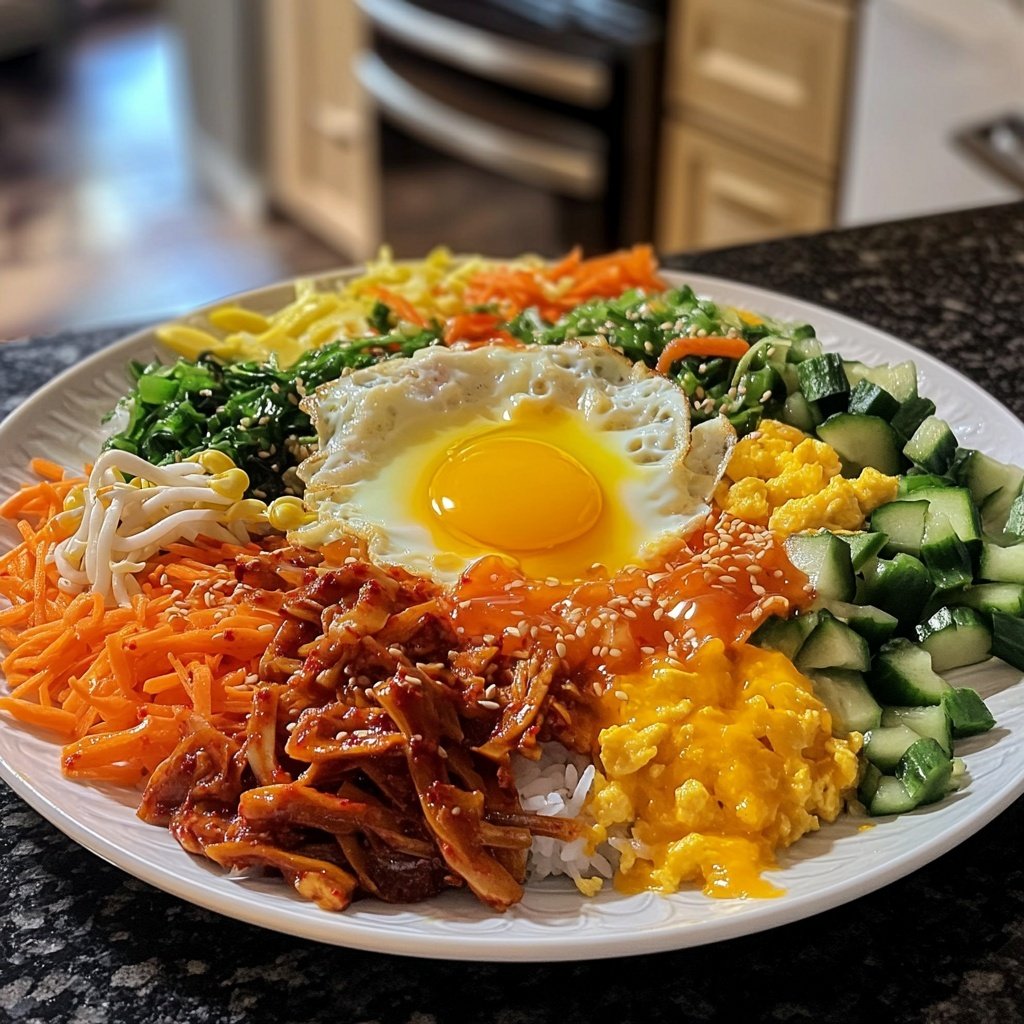
Korean Bibimbap is a vibrant and nutritious dish that brings together a delightful mix of vegetables, rice, and protein, all topped with a fried egg and spicy gochujang sauce.
Korean Bibimbap is not just a meal; it's a culinary art. This dish is a perfect representation of Korean culture, featuring a rainbow of vegetables, marinated proteins, and a spicy kick from gochujang. It's a wholesome option for lunch or dinner, and you can customize it based on your preferences!
Why You'll Love This Recipe
- A colorful and nutritious meal packed with flavor
- Customizable with your favorite vegetables and proteins
- Perfect for meal prep or a family dinner
The Essence of Bibimbap
Bibimbap is not just a meal; it's a beautiful representation of Korean culture and its culinary philosophy. The word 'bibimbap' translates to 'mixed rice,' which perfectly encapsulates the dish's essence. Each ingredient is carefully chosen for its flavor, texture, and nutritional benefits, creating a harmonious balance on your plate. This vibrant dish reflects the importance of color and variety in Korean cooking, making it not only delicious but also visually stunning.
Traditionally, bibimbap is served in a hot stone bowl, allowing the rice to form a crispy bottom layer. However, this recipe is versatile enough to prepare in any bowl, making it accessible for home cooks. The sizzling sound of rice and the colorful vegetables combine to create an inviting aroma that fills your kitchen, promising a meal that delights all the senses.
Nutritional Benefits
Korean Bibimbap is a powerhouse of nutrients, making it an excellent choice for health-conscious individuals. The variety of vegetables incorporated into this dish ensures a rich intake of vitamins, minerals, and antioxidants. From the crunch of carrots to the leafy greens of spinach, each component contributes its unique health benefits, promoting overall well-being.
Additionally, bibimbap can be easily adapted to accommodate various dietary needs. Whether you're a meat lover or prefer plant-based options, you can personalize this dish to suit your lifestyle. The inclusion of protein, whether from meat or tofu, helps maintain muscle mass and keeps you feeling satisfied, making bibimbap a great option for any meal.
Meal Prep and Versatility
One of the standout features of Korean Bibimbap is its remarkable versatility. This dish allows you to use whatever vegetables you have on hand, making it an ideal choice for meal prep. You can prepare the vegetables and protein in advance, storing them in separate containers for easy assembly throughout the week. This not only saves time but also minimizes food waste.
Furthermore, bibimbap is perfect for family gatherings or potlucks, where everyone can customize their bowls according to their preferences. By setting up a bibimbap bar, you can encourage creativity and experimentation, allowing your guests to mix and match ingredients. This interactive dining experience adds a fun element to any meal.
Ingredients
Base Ingredients
- 2 cups cooked short-grain rice
- 4 large eggs
Vegetables
- 1 cup carrots, julienned
- 1 cup zucchini, julienned
- 1 cup spinach
- 1 cup bean sprouts
- 1 cup shiitake mushrooms, sliced
Protein
- 1 cup ground beef or tofu
- 2 tablespoons soy sauce
- 1 tablespoon sesame oil
Sauce
- 4 tablespoons gochujang
- 2 tablespoons sesame seeds
Mix and match your favorite vegetables to make this dish your own!
Instructions
Prepare the Ingredients
Start by preparing all the vegetables. Julienne the carrots and zucchini, and slice the mushrooms. Rinse the spinach and bean sprouts. If using beef, marinate it with soy sauce and sesame oil.
Cook the Vegetables
In a large skillet, sauté each vegetable separately in a bit of oil until tender. Start with the carrots, then zucchini, spinach, bean sprouts, and mushrooms. Season lightly with salt.
Cook the Protein
In the same skillet, cook the marinated beef (or tofu) until fully cooked. Remove from heat and set aside.
Fry the Eggs
In another pan, fry the eggs sunny-side up until the whites are set but the yolks are still runny.
Assemble the Bibimbap
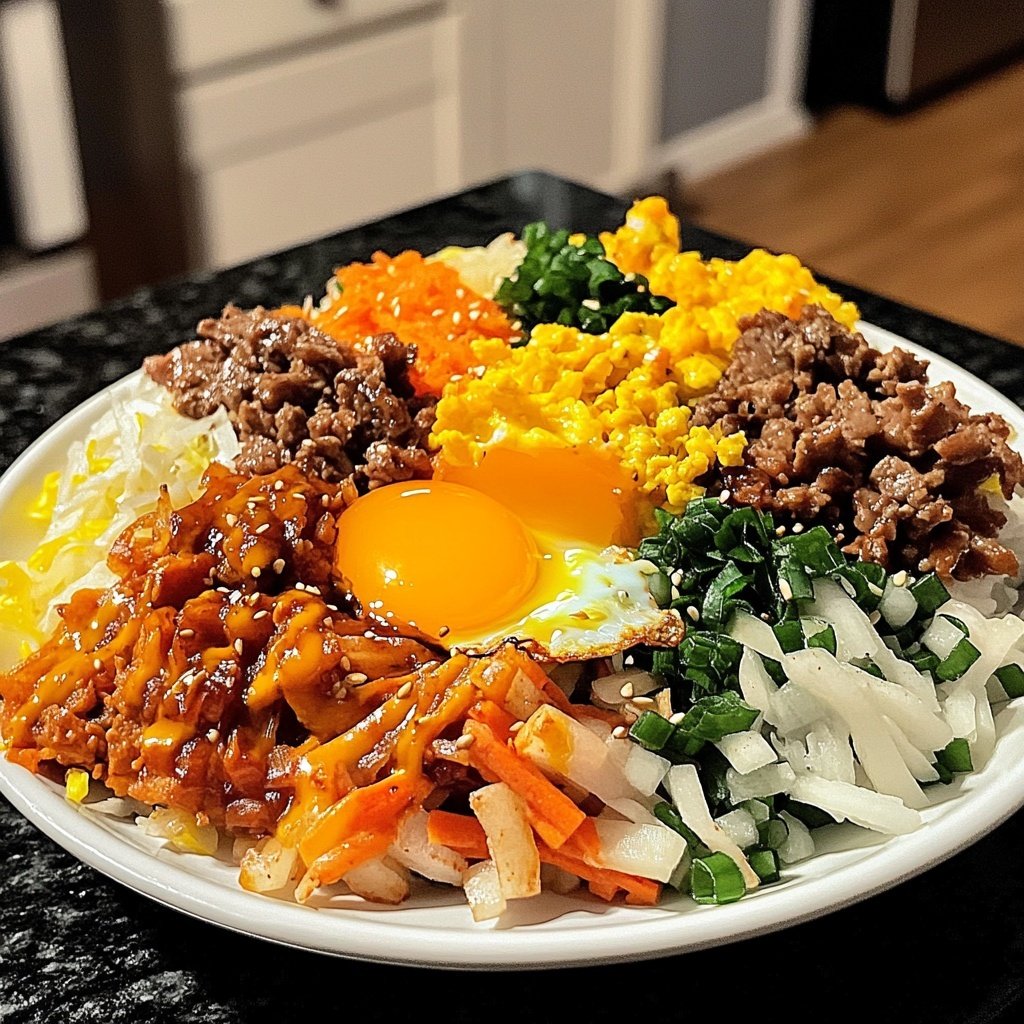
In a bowl, place a serving of rice at the bottom. Arrange the sautéed vegetables and cooked protein on top. Place a fried egg in the center and drizzle with gochujang. Sprinkle sesame seeds over the top.
Mix everything together before eating for the best flavor!
Professionele Tips
- Feel free to add other toppings like kimchi or avocado for added flavor and texture.
Tips for Perfect Bibimbap
To achieve the best results, ensure that your vegetables are cooked just until tender to retain their color and nutrients. Overcooking can lead to a mushy texture that detracts from the overall experience. Sautéing each vegetable separately allows them to shine and enhances their individual flavors, making your bibimbap even more delicious.
For an added layer of flavor, consider experimenting with different sauces or marinades. While gochujang is a classic choice, you can also incorporate elements like soy sauce, garlic, or ginger to complement the dish. Just remember to balance the flavors, ensuring that no single ingredient overwhelms the others.
Serving Suggestions
Korean Bibimbap is best enjoyed hot and fresh, but it can also be served at room temperature, making it a versatile option for various occasions. Pair it with traditional Korean side dishes, known as banchan, such as kimchi or pickled vegetables for a complete meal that showcases the flavors of Korean cuisine.
For a delightful finishing touch, garnish your bibimbap with sliced green onions, a sprinkle of seaweed, or a drizzle of sesame oil. These additions not only enhance the visual appeal but also elevate the taste, making each bite a delightful experience.
Vragen Over Recepten
→ Can I make Bibimbap vegetarian?
Absolutely! You can substitute any meat with tofu or additional vegetables.
→ What type of rice should I use?
Short-grain rice works best for Bibimbap as it is sticky and holds together well.
→ Can I prepare Bibimbap in advance?
Yes, you can prep the vegetables and proteins ahead of time. Just assemble the bowl when ready to eat.
→ Is there a substitute for gochujang?
If you can't find gochujang, you can use a mix of miso paste and chili flakes, but the flavor will differ.
Korean Bibimbap
Gemaakt door: Camille Norwood
Recepttype: Authentiek koken
Vaardigheidsniveau: Intermediate
Eindportie: 4 servings
Wat je Nodig Hebt
Base Ingredients
- 2 cups cooked short-grain rice
- 4 large eggs
Vegetables
- 1 cup carrots, julienned
- 1 cup zucchini, julienned
- 1 cup spinach
- 1 cup bean sprouts
- 1 cup shiitake mushrooms, sliced
Protein
- 1 cup ground beef or tofu
- 2 tablespoons soy sauce
- 1 tablespoon sesame oil
Sauce
- 4 tablespoons gochujang
- 2 tablespoons sesame seeds
Stappen
Start by preparing all the vegetables. Julienne the carrots and zucchini, and slice the mushrooms. Rinse the spinach and bean sprouts. If using beef, marinate it with soy sauce and sesame oil.
In a large skillet, sauté each vegetable separately in a bit of oil until tender. Start with the carrots, then zucchini, spinach, bean sprouts, and mushrooms. Season lightly with salt.
In the same skillet, cook the marinated beef (or tofu) until fully cooked. Remove from heat and set aside.
In another pan, fry the eggs sunny-side up until the whites are set but the yolks are still runny.
In a bowl, place a serving of rice at the bottom. Arrange the sautéed vegetables and cooked protein on top. Place a fried egg in the center and drizzle with gochujang. Sprinkle sesame seeds over the top.
Extra Tips
- Feel free to add other toppings like kimchi or avocado for added flavor and texture.
Voedingswaarde (Per Portie)
- Calories: 500 kcal
- Total Fat: 18g
- Saturated Fat: 4g
- Cholesterol: 210mg
- Sodium: 900mg
- Total Carbohydrates: 70g
- Dietary Fiber: 5g
- Sugars: 6g
- Protein: 20g